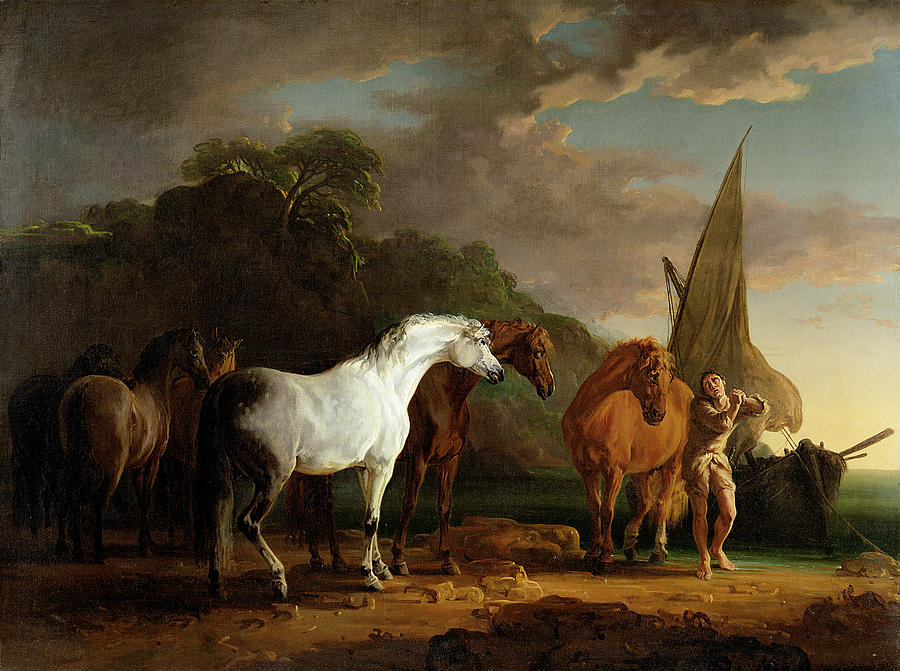
An ambiguous duality lies at the heart of all good satire. The author invites us to have a laugh at folly or vice. The humor helps us consider these realities from a safe distance because the themes they indict, if considered seriously, are not truly funny. Greed is a serious failing, yet we chuckle at the machinations of Volpone. We find hypocrites disgusting, but can’t restrain a belly laugh at the antics of Tartuffe.
The greatest works of satire often achieve a balance between this mirth and the tragedy inherent in it. The writer stands before us, unable to bear the weight of the horrors he has set out to mock. The ironic mask slips, and we glimpse the weeping face beneath. Perhaps there is no work of which this is more true than Jonathan Swift’s Gulliver’s Travels.
First published in 1726, the novel achieved overnight success and continued as one of the century’s most reprinted works.1 It remains popular and in print today in a wide variety of formats, including a Lilliputian edition measuring only two inches high.2 Its whimsical fantasy has often led to Bowdlerized adaptations that appeal to young people, and perhaps Rudyard Kipling helped cement this reputation by classifying it as mere children’s literature.3 But at its heart lies a complex and quite grown-up critique of the human condition which expresses a fierce desire that we might be better than we are.
The tale begins by anchoring us in the firmly prosaic details of the life of ship’s physician Lemuel Gulliver, who tells his story in the first person. Swift even includes a tongue-in-cheek preface in which Gulliver’s friend assures us that the narrator is a very honest fellow. “There is an air of truth apparent through the whole; and indeed, the author was so distinguished for his veracity, that it became a sort of proverb among his neighbors when anyone affirmed a thing, to say, it was as true as if Mr. Gulliver had spoken it.”4
The book’s plain style reinforces the notion of straight-faced reportage in the tradition of other contemporary travelogues. Gulliver recounts the banal facts of his youth, education, and early voyages in colorless tones. However, when the narrator is shipwrecked and awakens to find himself captured by six-inch high soldiers, we realize that the novel has swept us away from the safe harbors of realism and plunged us into the inventive riptide of the writer’s imagination.
Gulliver’s Travels, though, is no mere tall tale. Like Lucian’s True History or Thomas More’s Utopia, it carries a serious freight of moral invective in the guise of a fanciful sailor’s yarn. “Satire,” writes Dustin Griffin, “is a highly rhetorical and moral art. A work of satire is designed to attack vice or folly. To this end, it uses wit or ridicule. Like polemical rhetoric, it seeks to persuade an audience that something or someone is reprehensible or ridiculous; unlike pure rhetoric, it engages in exaggeration and some sort of fiction.”5
The novel before us, then, is a satire. Swift divides the narrative into four equal parts, each representing a voyage to an imaginary country. The central question that the writer explores is whether human beings are truly rational. As the writer quoted above puts it, “Gulliver’s Travels provokes and tests the idea of a ‘rational animal,’ asking how such an animal would really behave.”6
To this end, in Lilliput, Swift satirizes human pretensions by viewing them from an ironic distance, as if through the wrong end of a telescope. A king or president may seem very grave and impressive, but when he is only six inches high, he becomes ridiculous. All the supposed grandeur of European politics, its wars, and religious controversies are sent up in this way. The novel reveals the imposing figures of statesmen as tiny impostors and their pomp as mere pompous nonsense.
In the second book, when Gulliver is captured by the titanic inhabitants of Brobdingnag, this situation is reversed. Giants in literature often serve as elements of terror, but Swift upends this convention. His Brobdingnagians are not frightening, but grotesque parodies of human nature writ far too large. Gulliver sees every pore and blemish, cowers at the bawling voices, and is overcome by their noxious odors. An earlier writer might speak of mankind as “some higher divinity clothed in human flesh,” but Swift’s hyperbolic exaggeration of our gross physicality makes such a judgment sound naïve.7
However, the fabulist has more on his mind than body shaming and gross-out jokes. This reversal of scale allows Swift to make the critique of the first section explicit. While Swift pokes fun at them, the Brobdingnagians often present us with more enlightened social institutions than the writer found in his own times. When Gulliver proudly recounts the history of his own nation to the king, the Brobdingnagian monarch declares the English to be “the most pernicious race of little odious vermin that nature ever suffered to crawl upon the surface of the earth.”8 Swift’s contemporary readers – and, by extension, we who follow them – are the Lilliputians to these giants. All the strife of our politics and wars which we are bound to take so seriously are like the battles of mice and frogs in this cosmic perspective. The writer seems to be asking us to consider the question, “Would rational beings act this way?” By magnifying the human person, the second voyage cuts us down to our proper size.
One feature of the Travels that frequently delights readers is the vivid way in which the novel builds up the fantastic lands in which the narrator finds himself. In part, this is due to the relatively one-dimensional nature of its main character. In the eighteenth century, writers were beginning to explore the psychological possibilities of the novel. For example, a character like Robinson Crusoe has a complex interior life, contemplates the meaning of his fate, and experiences a religious conversion as a result of his circumstances. By contrast, Lemuel Gulliver presents us with a cardboard cut-out figure of a man. However, it is precisely this lack of depth that makes him Swift’s perfect foil. He acts as a kind of Marco Polo, simply reporting in a straightforward way his journeys to these imaginary realms. This gives Gulliver’s Travels a feeling akin to the best works of magical realism.
This aspect of the novel reaches its zenith in the final section of the second voyage. Gulliver is being kept by the giant Brobdingnagians as something between a pet and a curiosity. They have made him a “little” house surmounted by a ring so that it may be hung up like a bird cage. Gulliver suddenly awakens from a nap one day to find that a bird has caught hold of the ring and that he is being carried in this dollhouse through the air. All the carefully built-up details surrounding the narrator’s situation draw us into the episode with bated breath and a willing suspension of disbelief. With Gulliver we listen to the beating of the gigantic wings above us and are terrified as the monstrous bird lets slip the ring, allowing us to tumble to the sea. And with Gulliver we are thrilled and perplexed at our rescue by men of ordinary size. It is as if Swift allowed himself to set aside for a moment the novel’s didactic concerns and to be drawn into pure fantasy. And as readers we are drawn along with him into the fictive dream.
The first two voyages offer us mirror images of one another. In one, we see human beings greatly reduced in size, and in the other, greatly magnified. They are even complementary in scale. The Lilliputians are twelve times smaller than a normal human being, whereas the Brobdingnagians appear twelve times taller. The broad strokes of the satire in these sections is relatively easy to interpret.
The third voyage is not so simple to characterize. In quick succession, Gulliver visits a flying island, encounters magicians, interviews the famous dead, and meets a race of senile immortals. And the satiric targets at which the writer takes aim are not as easy to map onto their real-world targets. In general, however, the third book might be said to be united by the themes of the wrong use of reason and what we might call the spirit of abstraction. Due to the complexity of interpreting this part, for the purpose of this essay, we will pass over it in order to examine the fourth voyage, which appears to contain the key to understanding the work as a whole.
In the final section of the novel, the hapless Gulliver once again takes ship – this time as a captain. However, his crew soon mutinies and puts him ashore on an unknown island. There, he discovers a race of creatures called Yahoos that resemble human beings in every way except the use of reason and speech. To his further astonishment, he finds the island governed by intelligent horses that call themselves Houyhnhnm. Much of the book is taken up with dialogues between the narrator and his Houyhnhnm master, who takes him in.
This framework allows Swift to satirize human behavior as represented by the Yahoos without the usual rationales given by culture and language. For example, the Yahoos take great delight in digging up certain stones and hoarding them. “In some Fields of his Country, there are certain shining Stones of several Colours, whereof the Yahoos are violently fond, and when Part of these Stones is fixed in the Earth, as it sometimes happeneth, they will dig with their Claws for whole Days to get them out, then carry them away, and hide them by Heaps in their Kennels; but still looking round with great Caution, for fear their Comrades should find out their Treasure.” Framed in this way, stripped of the usual glamor that surrounds it, the pursuit of wealth is revealed in all its bestial irrationality.9
Swift contrasts the behavior of the Yahoos with that of the Houyhnhnm. “These Noble Houyhnhnms are endowed by Nature with a general Disposition to all Virtues, and have no Conceptions or Ideas of what is Evil in a Rational Creature, so their grand Maxim is, to cultivate Reason, and to be wholly governed by it.” The narrator notes that these wise horses do not even have a word for lying in their language and goes on to further illustrate their character. “Friendship and Benevolence are the two principal Virtues among the Houyhnhnms, and these are not confined to particular Objects, but universal to the whole Race. For a Stranger from the remotest Part is equally treated with the nearest Neighbour, and wherever he goes, looks upon himself as at home.”10
The narrator confesses that he increasingly began to identify the vile Yahoos with the whole of the human race. He begins to love and admire the Houyhnhnms as superior beings and desires to remain with them for the rest of his life. Unfortunately, he is exiled and eventually returns sorrowing to his European “Yahoo” kinsfolk. The novel ends with Gulliver, clearly traumatized by his experiences, shunning human society and spending as much time as possible in his stables.
We might be tempted to get caught up in Swift’s delightfully inventive narrative and enjoy it as we would any fantasy tale of talking animals. But the Travels is not The Wind and the Willows. In the work as a whole, Swift has demonstrated a serious didactic intent. What is he saying?
Throughout the Novel, Swift deflates the “civilized” pomp and pretensions of all kinds. In the final voyage, he reveals his vision of humanity as nothing but vicious beasts who quarrel over shiny rocks and fling their excrement at each other. Perhaps in the history of literature, there has been no more severe indictment of humanity.
By contrast, it is plain that the writer wishes us to consider the Houyhnhnms as a kind of unattainable Utopia or idealized society. It is a community governed by natural reason and virtue in which every member of the group is treated equally and with civility. If Gulliver’s Travels poses the question, “How would rational animals live?” Swift’s answer is that they would live like Houyhnhnms.
There are complexities in interpreting this final section. Many readers find themselves put off by Gulliver’s misanthropy at the end of his tale. Is this Swift’s attitude? His text has a clear pedagogical purpose. Is this the attitude he wishes his readers to take?
Perhaps the very real sorrow that Gulliver expresses and continues to experience as he leaves the Houyhnhnms may give us a clue. There is a definite shift in tone toward the end of the novel. The whimsy turns to disgust, and the laughter to tears. We have seen that Gulliver is no Robinson Crusoe, not a well-rounded three-dimensional character with his own interior life. However, as readers, we feel his grief at the end and realize that he has developed and been changed by his experiences. But has he been deepened by his experiences or disillusioned by them?
The key to understanding the final book and the work as a whole can be found in a letter from Swift to his friend Alexander Pope. It is worth quoting the passage at some length.
“I have ever hated all Nations professions and Communityes and all my love is towards individualls for instance I hate the tribe of Lawyers, but I love Councellor such a one…I hate and detest that animal called man, although I hartily love John, Peter, Thomas and so forth…I have got Materials Towards a Treatis proving the falsity of that Definition animal rationale (rational animal); and to show it should be only rationis capax (capable of reason). Upon this great foundation of Misanthropy The whole building of my Travells is erected.”11
Many critics read this in an overly literal way, taking the feeling of disgust with mankind as the foundation of the Travels. But it makes better sense of the text to examine the cause of this misanthropy. Swift’s disgust with humanity in general flows from the fact that they are capable of reason, but don’t behave rationally or use reason in the service of evil. The grief that Gulliver feels as he leaves the island of the Houyhnhnms is Swift’s grief at realizing that we have the potential to live wisely and quietly, but do not choose to do so.
And we, the readers, are invited to share that sorrow in the fourth book. Through Gulliver’s eyes, we have been granted a vision of an idyllic way of life, a Utopia in which all live by reason and virtue. But with Gulliver, we must grapple with the knowledge that this earthly paradise is beyond our reach. We are exiled from it and forced to live among the Yahoos who pursue greed, act corruptly, and squander the gift of reason. The grinning mask slips, and we glimpse the satirist weeping. And if we are to understand his great work, we must weep with him.
Gulliver’s Travels offers a savage satirical attack on humanity. However, it also provides a poignant glimpse of a society governed by reason and virtue. It leaves us with laughter, but also with tears and an unassuageable ache at what we are not now but perhaps one day might be.
Like this post? Check out my published work here.
Notes:
- Richetti, John, A History of Eighteenth-Century British Literature, Wiley Blackwell. Kindle Edition, loc. 5308
- Der Shop für kleine Bücher – miniboox.de – Gulliver´s Travels
- Borges, Jorge Luis, Labyrinths, New Directions Publishing, p.185
- Swift, Jonathan, Gulliver’s Travels, Penguin Classics, p.18
- Griffin, Dustin, Satire: A Critical Reintroduction, University Press of Kentucky, p.4
- Griffin, p.41
- Pico Della Mirandola, Giovanni, Oration on the Dignity of Man, Caponigri, A Robert Tr. Regenry Publishing, Kindle Edition, loc. 151
- Swift, p. 122
- Swift, p. 239
- Swift, p.245-246
- Swift, Jonathan, The Correspondence of Jonathan Swift Vol 3, Harold Williams Ed. Oxford at the Clarendon Press, p. 103
All the Pretty Horses: Gulliver Among the Houyhnhnms Copyright 2025 Jonathan Golding
 Worlds Imagined